A monument quote and a cemetery invoice cover different things, and the gap between them is where families get surprised. Here is how to read both before paying a deposit.
The number a monument dealer writes on a quote is rarely the number a family ends up spending, and the difference is not usually the dealer's doing. Two separate businesses are involved in putting a stone on a grave: the mason, who sells and fabricates the memorial, and the cemetery, which owns the ground and controls what happens on it. Each bills for its own work, on its own schedule, sometimes months apart. A careful reader treats the mason's quote as one half of a document and goes looking for the other half before signing anything.
What the mason is actually selling you
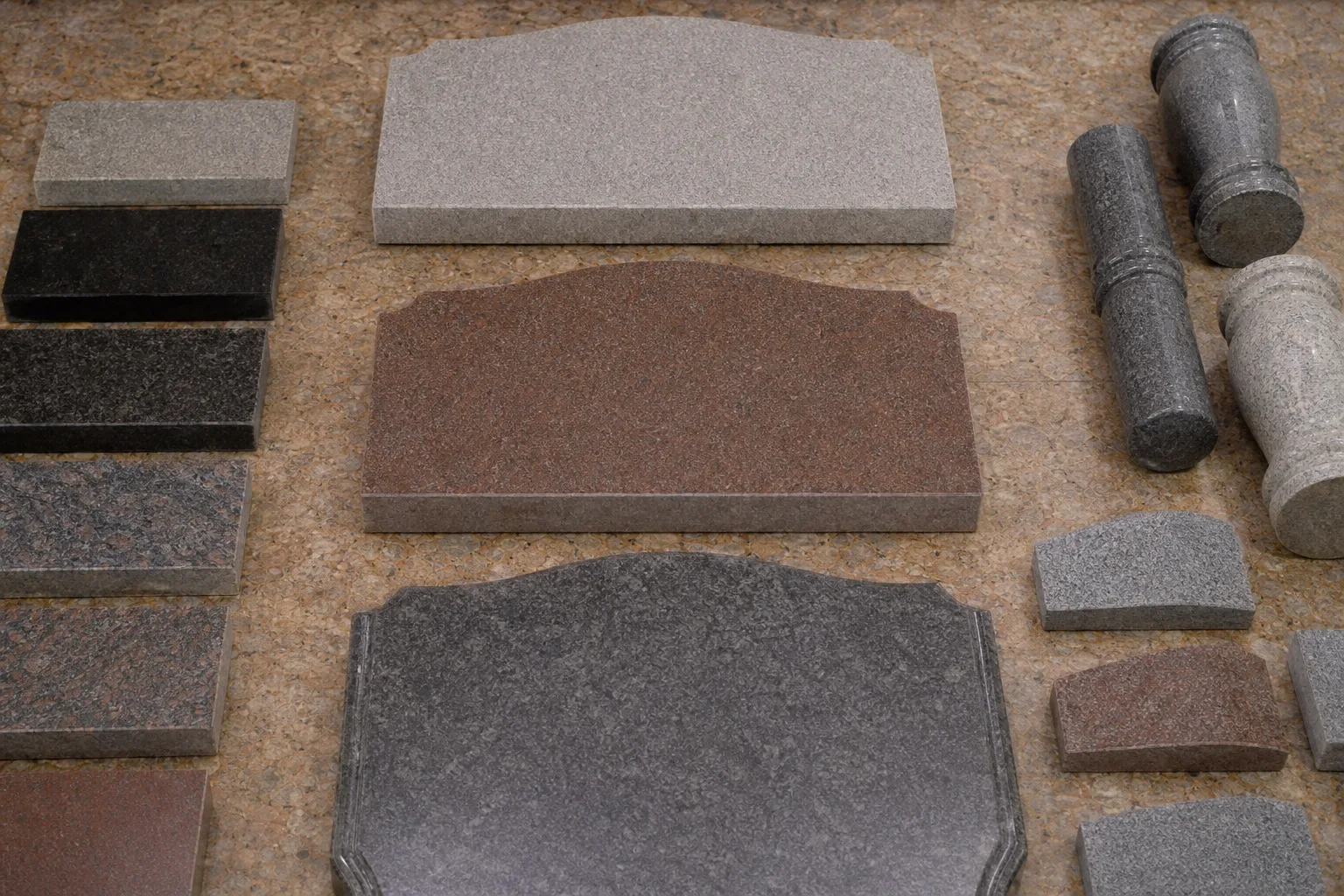
A monument price breaks into four components that a good dealer will separate on request: the raw stone, the fabrication and lettering, the transport, and the labor of setting it in place. Stone cost tracks material, color and size, with common domestic gray granite at the low end and imported reds, blacks and blues considerably higher. Fabrication covers polishing, shape work, and the carving itself, which is priced by character count or by design complexity depending on the shop. Delivery is real money on a heavy piece. Setting labor, where the cemetery allows the dealer to do it, is billed by the hour or by the job.
Ask for that split in writing. A quote reading simply "36 inch upright granite memorial, installed, $4,200" tells you nothing about which line items can flex if the budget is tight. Once the components are visible, choices become possible: a smaller die on the same base, a different granite color, a simpler shape, fewer lines of lettering, a vase deleted. Dealers generally will itemize when asked, because the Federal Trade Commission oversees how funeral goods and services are priced and disclosed to buyers, and itemized pricing has long been the expected practice in the trade.
The charges that come from the cemetery instead
The cemetery bills for the things it controls, and it controls more than most families expect. The foundation is the usual first item: a poured concrete pad, sized to the memorial and set to a depth the cemetery specifies, priced either by the square inch or the square foot or as a flat charge by marker size. Many grounds pour foundations only in certain months, which is why a stone ordered in November may not be set until spring. A setting or installation fee often follows, charged when cemetery staff place the memorial rather than the dealer's crew. Some grounds add a permit or inspection fee for the privilege of bringing a monument through the gate at all.
None of these charges appear on the mason's quote unless the dealer collects them on the cemetery's behalf, which some do as a convenience and others deliberately do not. The permit fee in particular tends to be modest in dollars and large in consequence, because work performed without it can be refused at the entrance or removed afterward. Before paying a deposit, call the cemetery office directly and ask for its current fee schedule for foundations, settings, permits and any required care contribution. Get it by email if you can. A schedule in writing settles later arguments quickly.
The bill that arrives years later
Companion markers create a second event that almost nobody budgets for at the time of the first order. When a surviving spouse dies, the death date has to be cut into a stone already standing in the ground, and that work is priced separately, usually as a per-character or per-date charge, plus a trip fee for the carver. If the cemetery requires the memorial to be removed, reset and refoundationed for the work, add those charges too. Ask the dealer now what a later date addition would cost in current dollars, and ask the cemetery whether on-site inscription is permitted.
How to compare two quotes honestly
Two dealer quotes are only comparable when both are read against the same cemetery fee schedule. One dealer may include the foundation charge as a pass-through and the other may leave it out, producing a spread of several hundred dollars that reflects bookkeeping rather than value. Build a single sheet listing every line from both sides: stone, carving, delivery, setting, foundation, permit, sales tax, and the estimated later inscription. Then the comparison is real, the deposit is informed, and the second envelope from the cemetery arrives as an expected item rather than a surprise.
The families who avoid the surprise are simply the ones who made two phone calls instead of one, and asked each party to put its own numbers on paper before any money changed hands.